Diversification
Part of Revenue planning for independent creators
Choosing a revenue stream that fits the creator's work
Choose a creator income stream by checking buyer value, delivery effort, payment timing and the work you can sustain.
Choose a revenue stream by checking the work you can repeat, who would pay for it and what you can reliably deliver. A model may look attractive on a revenue chart yet fit poorly if it demands more client calls, publishing or support than your week allows.
Key facts from business.gov.au on cash flow management
- Cash flow statementEssential for tracking income and outflows. Use it to plan for expenses and payments.
- Guide to managing cash flowProvides practical steps to avoid cash shortfalls and maintain financial stability.
Describe the work first
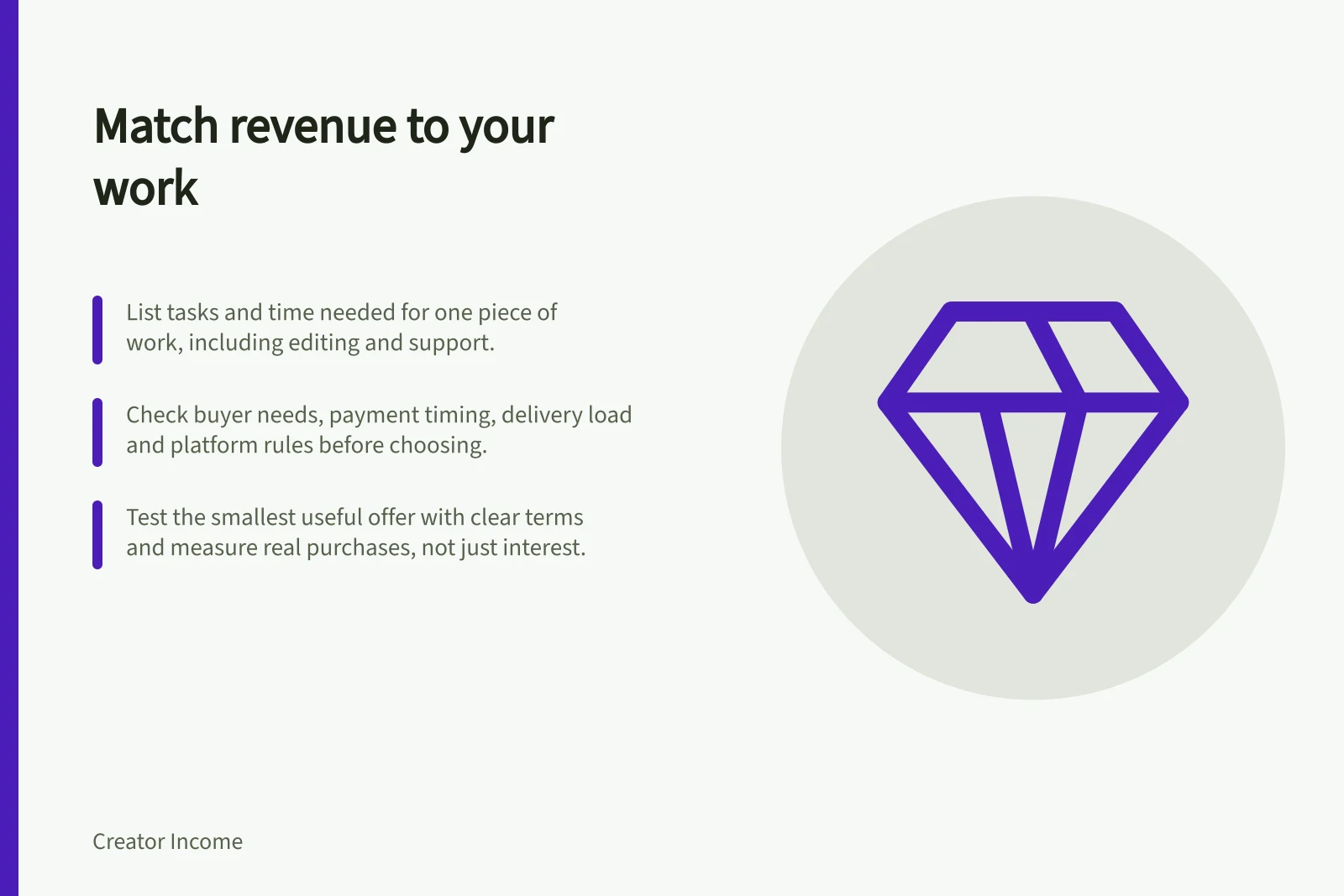
List the tasks behind one useful piece of work: research, making, editing, publishing, answering questions and administration. Note the time each takes and which tasks you can sustain. Then describe what a buyer would receive.
A creator who enjoys solving a specific problem with one person might explore a tightly scoped service. Someone who makes a reusable resource might explore a one-off product. Continuing updates might support a recurring offer.
These are possible matches between work and offer, not proof that anyone will buy.
Check four constraints
- Buyer and outcome.Who pays, and what do they receive? A service client usually needs a defined output; an audience offer needs a benefit people understand.
- Delivery load.Include revisions, updates, access problems and support after payment. Open-ended promises can consume the time needed for future work.
- Time to cash.When is payment due, and when will it arrive? An unpaid invoice or estimated platform payout cannot cover an expense due today.
- Control.Which terms, eligibility rules or buyer decisions affect payment? Check the current rules of any platform you plan to use.
If an option strains your capacity, consider narrowing its scope or reducing delivery frequency before you abandon the underlying idea.
Try the smallest useful offer
For a service, propose one paid project with agreed boundaries. For an audience offer, state the specific benefit and invite a purchase or commitment on stated terms. For platform income, confirm eligibility and treat projected earnings as uncertain until reports and payouts provide evidence.
Interest, followers and views are signals to investigate; they are not completed sales.
Decide in advance what you will measure: paid purchases, collected invoices, delivery hours, refunds or repeat demand. Record your assumptions, then compare them with what happens. A proposed trial is not evidence of demand.
Decide what to continue
Keep an offer when buyers understand it, payments arrive on workable terms and delivery leaves enough time and money to continue. Revise the scope or price if buyers want the outcome but the work is too costly. Pause an offer if its central promise requires capacity you cannot provide.
Choose one main stream for the next planning period; other income need not become a permanent offer.