Revenue Planning
Part of Creator revenue diversification
Planning income during a platform disruption
Separate available cash, earlier unpaid amounts and uncertain new earnings while protecting buyer commitments during a platform disruption.
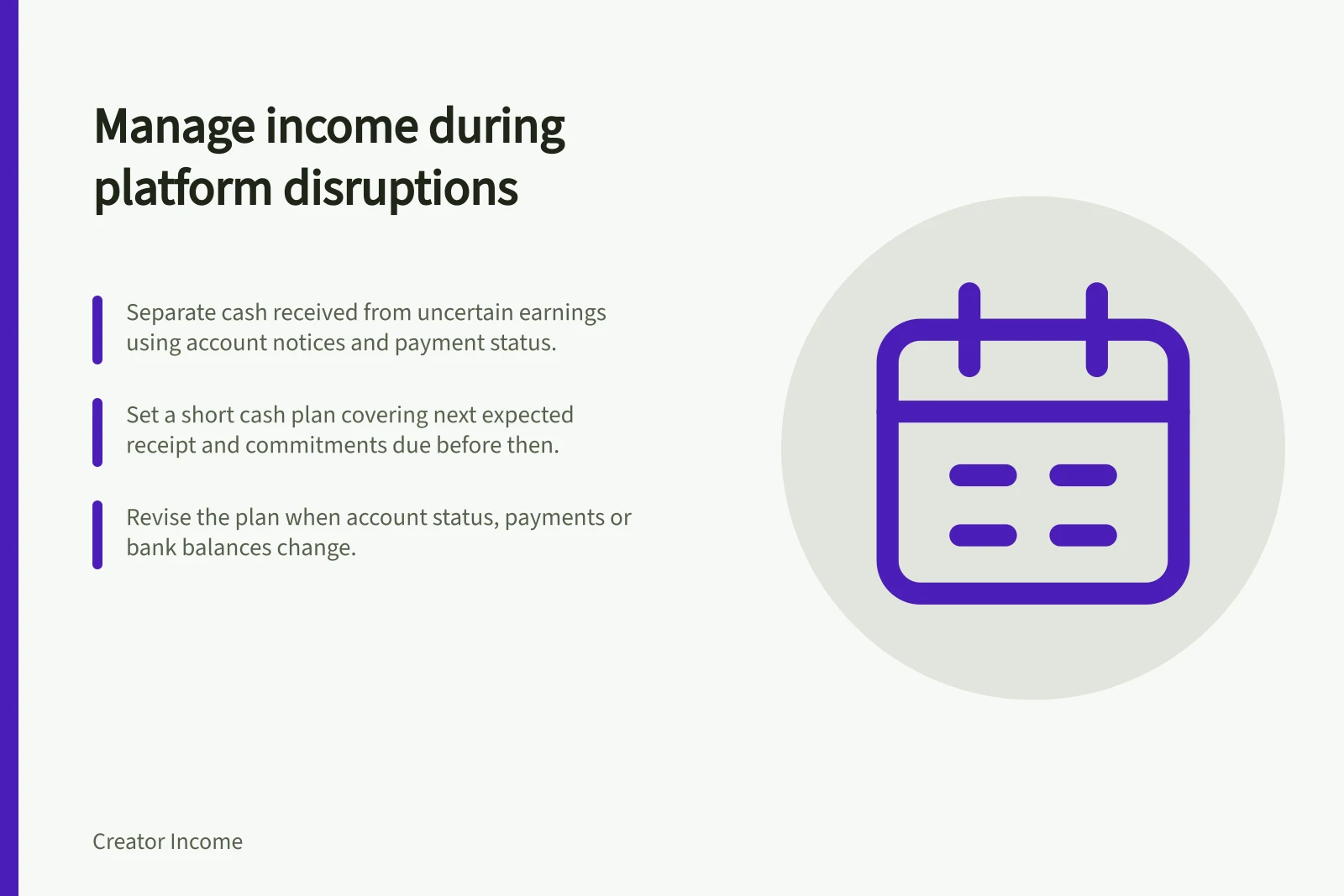
During an interruption, separate cash already received from receipts supported only by account records or estimates. Set a short plan from today to cover the next expected receipt and commitments due before then, and revise it as account status changes.
For YouTube, use the channel’s notice and payment status alongside the named YouTube Help pages for earnings, paused monetisation or disabled monetisation.
Identify what has stopped
A drop in reach, a changed earnings estimate, a payment hold, paused monetisation and disabled monetisation have different effects. Read the account notice and payment status, and keep a dated record of each. A low dashboard figure does not mean an earlier payment has been cancelled.
For a YouTube channel, compare the account’s notice with YouTube Help’s “Monetization is paused for my channel” or “Monetization is disabled for my channel”, as applicable. Use “YouTube Partner earnings overview” when checking the earnings information.
Key indicators to monitor during platform disruption
- Monetisation status
- Paused or disabled (check YouTube Help)
- Payment hold status
- Confirmed via YouTube dashboard or ATO records
- Earnings estimate change
- Compare before and after disruption data
- Reach drop
- Monitor via YouTube Analytics
Separate available and uncertain money
List expected receipts over the short-plan period under four headings:
- Cash received:money already available to the business, allowing for amounts committed to other purposes.
- Earlier work awaiting payment:finalised platform amounts or accepted client fees, with any hold, threshold or collection condition noted.
- Possible new earnings:amounts that depend on earning activity continuing or resuming. State the condition rather than assigning a dependable receipt date.
- Other receipts:buyer payments or client fees from unaffected routes, distinguishing accepted and unpaid amounts from cash collected.
Treat cash already received as available. Keep a finalised platform amount that remains unpaid and an accepted invoice that remains uncollected separate from cash on hand; treat possible future earnings as conditional.
Types of income during a platform disruption
- Cash received
- Available immediately; includes funds already in bank
- Earlier work awaiting payment
- Finalised amounts with hold, threshold, or collection conditions applied
- Possible new earnings
- Conditional on activity resuming; no dependable receipt date
- Other receipts
- Unaffected buyer payments or client fees; distinguish accepted vs. unpaid
Make the short cash plan
Choose an end date that covers the next expected receipt and commitments due before it. Put confirmed cash and conditional receipts beside their dates, and do not rely on a conditional receipt to meet an earlier commitment.
Include the costs of serving existing buyers, contractor and software payments, applicable refunds, and tax or GST obligations and due dates shown in your records.
If the plan shows a gap, consider deferring optional spending or confirming a client’s payment date under the existing agreement. If delivery must change, explain the issue and proposed resolution to affected buyers.
Check recovery and revise the plan
Check the current YouTube account notice, channel state and payment record. Match a paused or disabled monetisation notice to the corresponding YouTube Help page, and check the earnings information in “YouTube Partner earnings overview”.
Record each change in the notice, payment record or bank balance against the dated plan. When earnings resume, keep the disruption period in your records: restored access does not itself settle the earlier cash gap.