Revenue Planning
Creator financial organisation
Organise creator transactions, source documents, cash due dates and reviews in a system you can explain and maintain.
Organise creator finances to trace each transaction, see when cash will move and identify what you still owe. Keep the documents behind those answers together and review them regularly. A spreadsheet or accounting system works if the figures remain explainable.
Keep transactions traceable
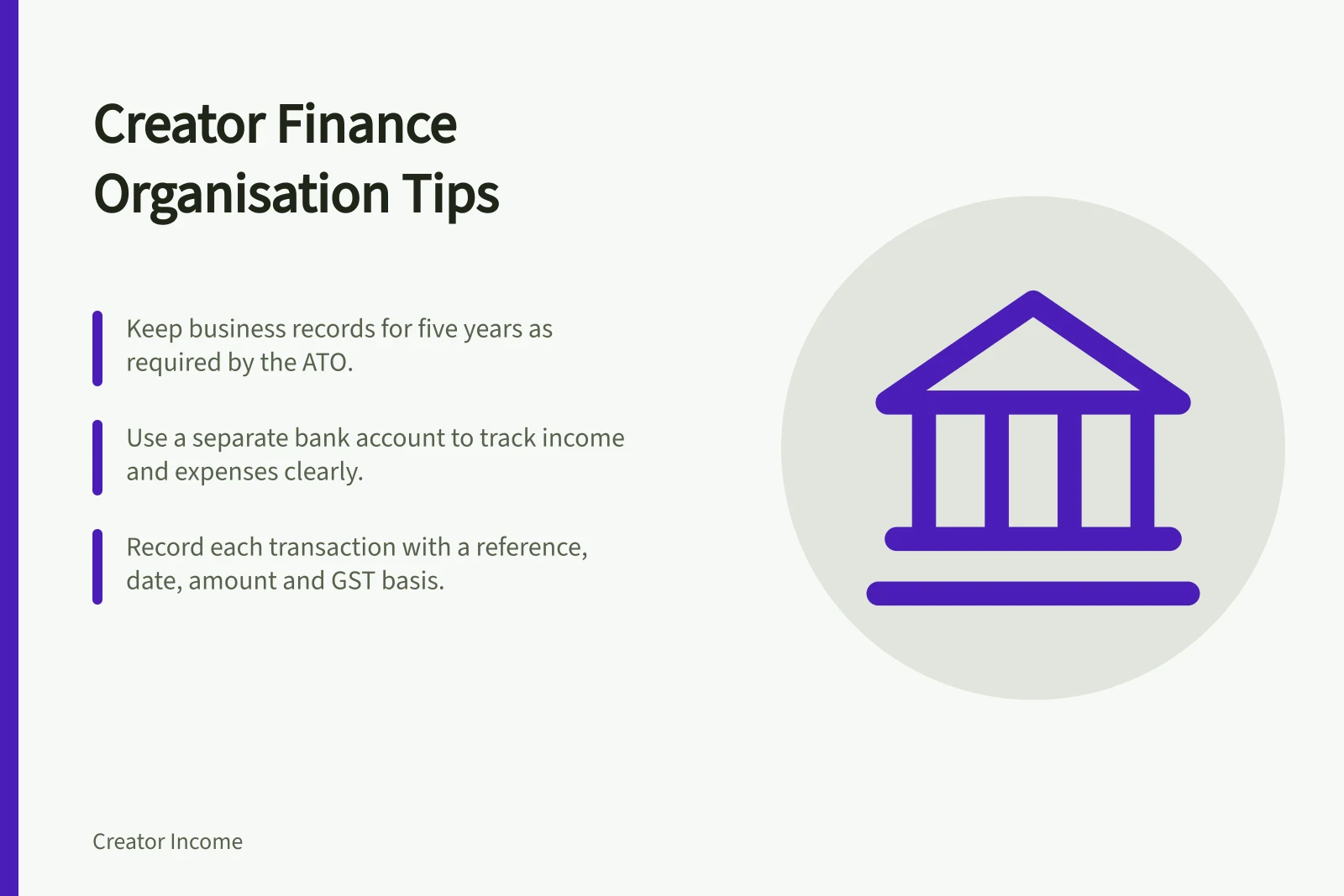
Record business income, spending and transfers against the invoice, receipt, agreement or platform statement that explains each entry. Use a reference linking the entry to its document. Record the date, amount, currency and GST basis where relevant. For a purchase with both business and private use, keep the basis for the proposed business portion.
A separate business bank account makes the trail easier to follow. In Australia, it is recommended but not compulsory for a sole trader; a partnership, company or trust needs a separate account for tax purposes. If a sole trader uses one account for both purposes, personal transactions must be clearly identified in the cash book.
Check the record-keeping basics
Keep records for transactions that relate to tax, superannuation and registrations. This can include income and sales, business expenses such as cash purchases, asset or stock expenses, GST records if you are registered, and employee or contractor records where relevant. End-of-year records should also show creditors and debtors.
Records must be in English or easy to translate into English. The Australian Taxation Office’s free record-keeping evaluation tool can help you check which records apply to your business and how well your system is working.
Keep payment stages distinct
A sale, an unpaid invoice, a platform earnings figure and a bank receipt answer different questions. Label each figure and connect later adjustments or payments to the original item. A transfer between your own accounts is a movement of cash, not another customer payment.
For each current offer, keep a short view of cash received, amounts awaiting payment, bills due and work already promised. This helps answer what can be paid on its due date, but it does not determine when income is recognised for accounting or tax purposes.
Put future payments on a calendar
List supplier bills, subscriptions, contractor payments and any applicable tax obligations by due date. Place expected receipts in the periods when they may arrive, marking each as collected, agreed but unpaid or assumed. Label estimates and use a consistent GST basis.
A cash flow forecast starts with an opening balance, adds incoming cash and subtracts outgoing cash to show a closing balance for each period. Test a case where an uncertain receipt arrives late.
If that leaves a payment uncovered, reconsider the timing or scope of an optional purchase before committing. Keep money set aside for known obligations separate from a buffer for unexpected shortfalls.
A cash flow statement records all money moving into and out of the business. Reviewing it can help reveal payment cycles and seasonal trends, and make potential shortages or surpluses easier to spot before they affect a due payment.
When estimating future periods, use past results where available and account for seasonal patterns and major costs. Keep estimated figures clearly labelled and explained so they can be distinguished from actual amounts when you review the next period.
Review and retain the records
At a regular review, match bank entries to their documents, identify missing receipts and check upcoming due dates. Compare the forecast with cash received and paid, then record whether differences came from timing, changed costs, refunds or assumptions that did not become sales. Keep the earlier forecast when updating the next one.
Store records securely and keep them for the applicable period. Australian guidance says records supporting claimed business tax deductions must be kept for five years, with some requiring longer. Keep source documents accessible if a platform or bookkeeping tool changes.
An accountant can help with treatment that depends on your structure or transactions. Give them the underlying records and specific questions.
Make digital records usable
The ATO recommends digital record keeping where possible. You can keep digital or paper records, and generally do not need paper originals after saving a true, clear digital image, unless a particular law or rule says otherwise.
A digital system is only useful if you can access and control its information. Keep passwords available to authorised users, back up records in case a device fails and, if possible, keep a secure off-site backup. Store records so they cannot be changed or damaged.
In this guide
- Separating business and personal creator expensesSort creator purchases by purpose, document mixed use and keep personal transactions clear in Australian business records.
- Building a cash buffer for uneven incomeUse your due dates and a cautious cash forecast to set, build and refill a buffer for uneven creator income.
- Preparing records and questions for a qualified accountantPrepare a traceable document set, exception list and clear questions for an Australian accountant or registered tax practitioner.
- Planning for costs that arrive before revenueMap upfront production costs against deposits, milestones and expected receipts before committing cash to a creator project.