Sponsorship Pricing
Part of Affiliate income for creators
Disclosing affiliate relationships where readers will notice
Practical disclosure placement for creator articles, videos, social posts and email, with Australian guidance and programme limits.
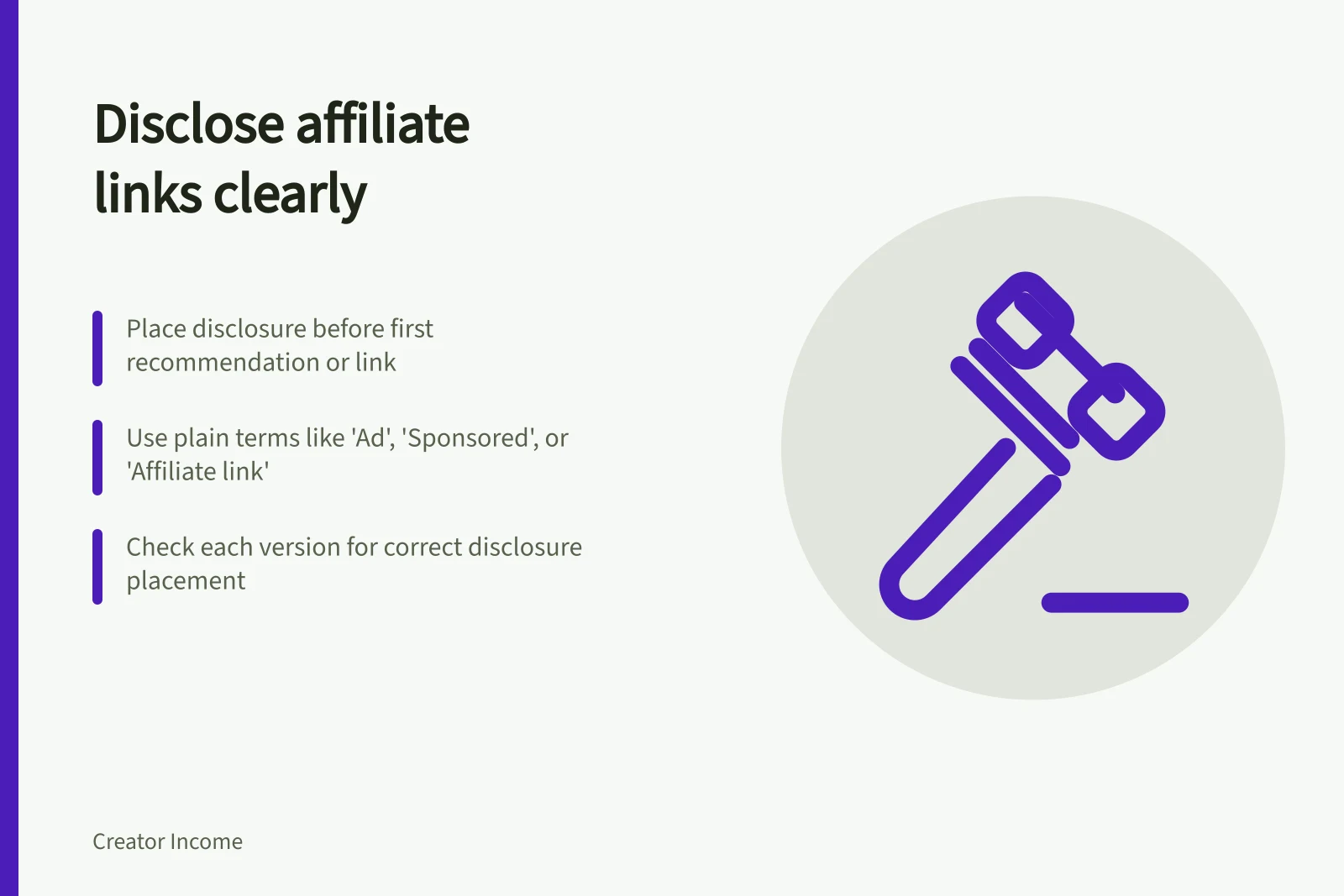
Place the disclosure before readers reach the first recommendation or affiliate link, so they see the connection before acting. Say plainly what benefit you may receive; a notice elsewhere on the site can be missed.
On 7 December 2023, the ACCC reported that 81 per cent of 118 social media influencers reviewed had posts raising concerns under the Australian Consumer Law. The most common issue was undisclosed brand relationships; vague labels such as “sp” and “spon” and formatting that hid notices were also concerns. Under the Australian Consumer Law, businesses must not mislead or deceive consumers; that applies to influencers engaging in trade or commerce, as well as brands and marketers advertising online.
Key Findings from ACCC Review of Influencer Content
- Percentage of influencers with concerns
- 81%
- Number of influencers reviewed
- 118
- Most common issue
- Undisclosed brand relationships
Put the explanation in the reading path
In an article, place a short disclosure before the first relevant recommendation or link. This lets readers see the relationship before deciding whether to follow the link.
In a long comparison that readers may enter midway through, repeat the disclosure near a later group of recommendations when needed. Keep it close enough that readers encounter it before acting.
For a video, make the relationship clear in content viewers can see or hear, not only in the description. Put spoken or on-screen wording alongside the recommendation.
For a social post, keep the disclosure with the recommendation rather than behind a collapsed caption. Use any platform-provided disclosure label as well as plain wording, if available.
For an email, put the disclosure before or with the affiliate item, not only in a standard footer. Readers should see it before they act on the recommendation.
Preview the finished format on a phone and wherever a caption or description may be shortened. Check that the disclosure is visible before the recommendation or link.
Disclosure Best Practices by Format
- ArticlePlace disclosure before the first recommendation or affiliate link.
- VideoInclude spoken or on-screen disclosure alongside the recommendation.
- Social postKeep disclosure with the recommendation; avoid collapsed captions.
- EmailPlace disclosure before or with the affiliate item—do not rely on footer only.
- Reposts or updatesRecheck disclosure when changing links, programs or content versions.
Use words that describe the benefit
Clear labels include “Ad”, “#ad”, “Sponsored”, “Paid partnership” and “Affiliate link”. For commission, you could write: “I may earn a commission if you buy through this link.”
If you received a product or another benefit to create the content, identify that too. A commission notice alone does not explain a gift.
Do not imply that you bought or tested a product if you did not. Match the wording to the actual arrangement.
Avoid unexplained shorthand: the ACCC identified “sp” and “spon” as vague or confusing labels instead of “sponsored”. Check each affiliate program’s current terms for any specific disclosure requirement before relying on a generic notice.
Amazon.com.au’s Associates Program Operating Agreement incorporates its Program Policies by reference. Check the agreement and policies for any requirements that apply to your disclosure.
Effective vs. Ineffective Disclosure Practices
- EffectiveUse clear terms like ‘#ad’, ‘Sponsored’, or ‘Affiliate link’; state: ‘I may earn a commission if you buy through this link.’
- IneffectiveUse vague labels like ‘sp’ or ‘spon’; rely only on hidden footers or descriptions.
Check every version you control
One recommendation may appear in an article, repost, profile or short clip. Keep the disclosure beside the recommendation in each version, and use any platform-provided disclosure label as well as plain wording, if available.
When you repost content or change a link or program, recheck the disclosure, destination and surrounding claim together. A tracking URL should not be the reader’s only clue that a commercial relationship exists.