Revenue Planning
Part of Creator financial organisation
Planning for costs that arrive before revenue
Map upfront production costs against deposits, milestones and expected receipts before committing cash to a creator project.
Before committing to a creator project, put required payments on a timeline beside the cash available to fund them. A project can appear worthwhile overall and still create a shortfall when production must be paid for before a client or audience pays. Identify that shortfall before accepting the expense.
Map the project by date
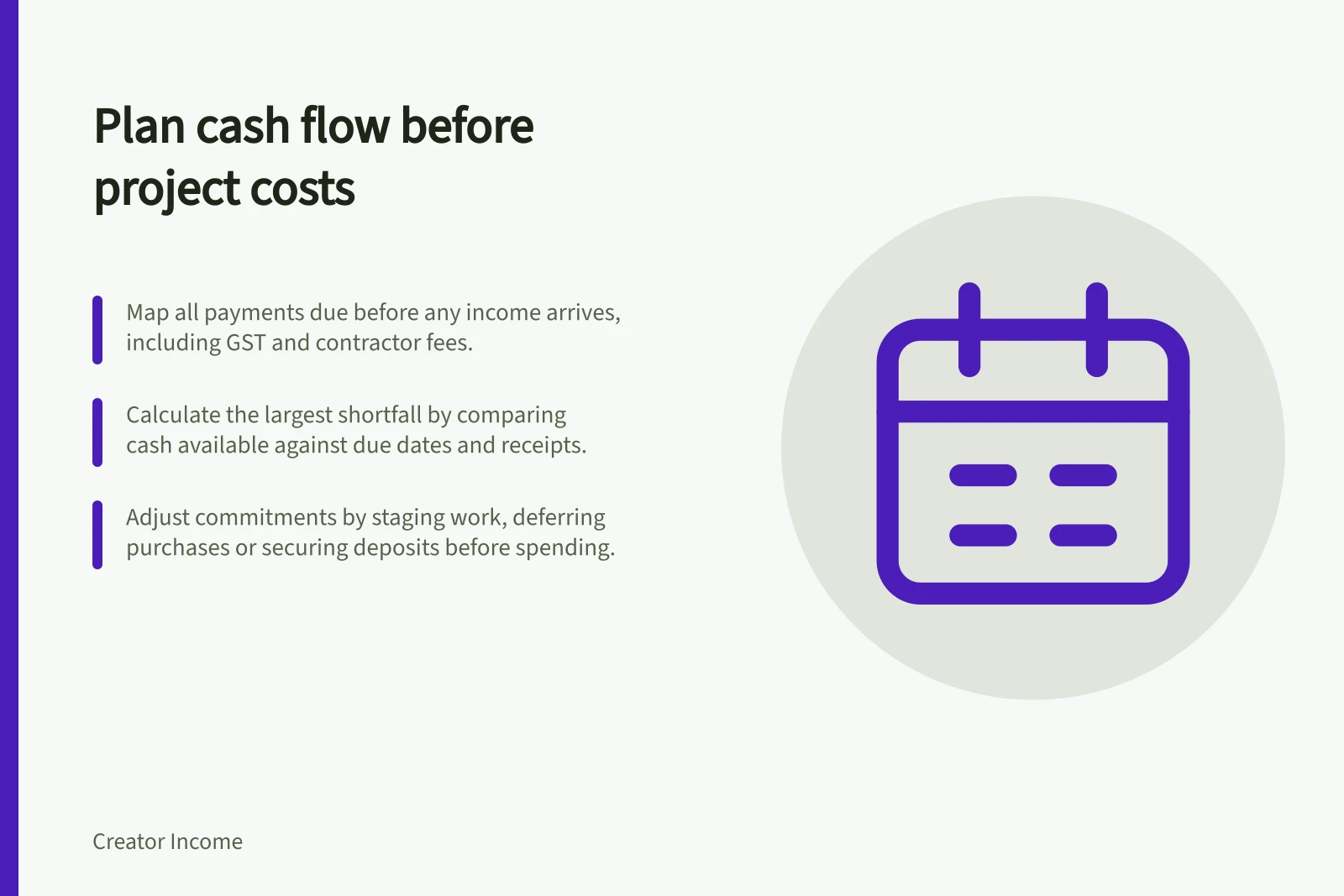
List work and payments needed before a receipt: research, production, editing, contractors, equipment access, software or venue costs. Separate commitments due now from purchases that can wait until a buyer accepts or a milestone is reached. Record the amount or estimate, payee and due date.
Add receipts with their conditions. An accepted client agreement may specify a deposit or milestone; an unaccepted proposal remains uncertain. A platform estimate or hoped-for launch sale may arrive after costs fall due, or may not occur. State the currency and GST basis where relevant, and label estimates.
Timing question / Record to inspect
- What must be paid before work begins?
- Supplier terms and production plan
- What payment has been agreed?
- Accepted client or buyer terms
- When might cash arrive?
- Deposit, milestone, settlement or invoice terms
- What happens if it is late?
- Available cash and other payments due
Find the funding gap
Start with cash available for this project after other commitments. At each date, add receipts expected by then and subtract payments due. A negative balance shows the extra funding needed at that point; the largest negative balance is the project's greatest modelled shortfall.
Also check a case in which an agreed receipt arrives late. A contractual due date is not a bank receipt.
For illustration, suppose a project has no uncommitted opening cash, requires A$900 for production before delivery and has an agreed A$1,200 fee due only afterwards. With no deposit, it needs access to at least A$900 before the fee arrives, plus enough for other commitments. These figures are arithmetic, not a suggested fee or typical result.
Change the commitment if necessary
Possible responses include narrowing the first deliverable, staging contractor work, deferring an optional purchase or agreeing on a deposit or earlier milestone with the client. Record revised terms in the agreement before relying on them. A proposed deposit remains uncertain until agreed, and an agreed deposit remains unavailable until paid.
For an audience product without accepted buyers, fund only the initial scope you can afford and describe what will actually be delivered. Do not treat hoped-for launch sales as committed receipts. Keep existing customer promises and money set aside for tax or other obligations visible when deciding what cash is available.
Before each new outlay, check the bank balance, bills due, confirmed receipts and work still owed. If a milestone slips, revise the timeline and decide whether optional work should wait. After completion, compare the original cash schedule with actual payments and receipts to inform the next project.