Memberships
Part of Evaluating creator revenue offers
Closing an offer while meeting existing customer commitments
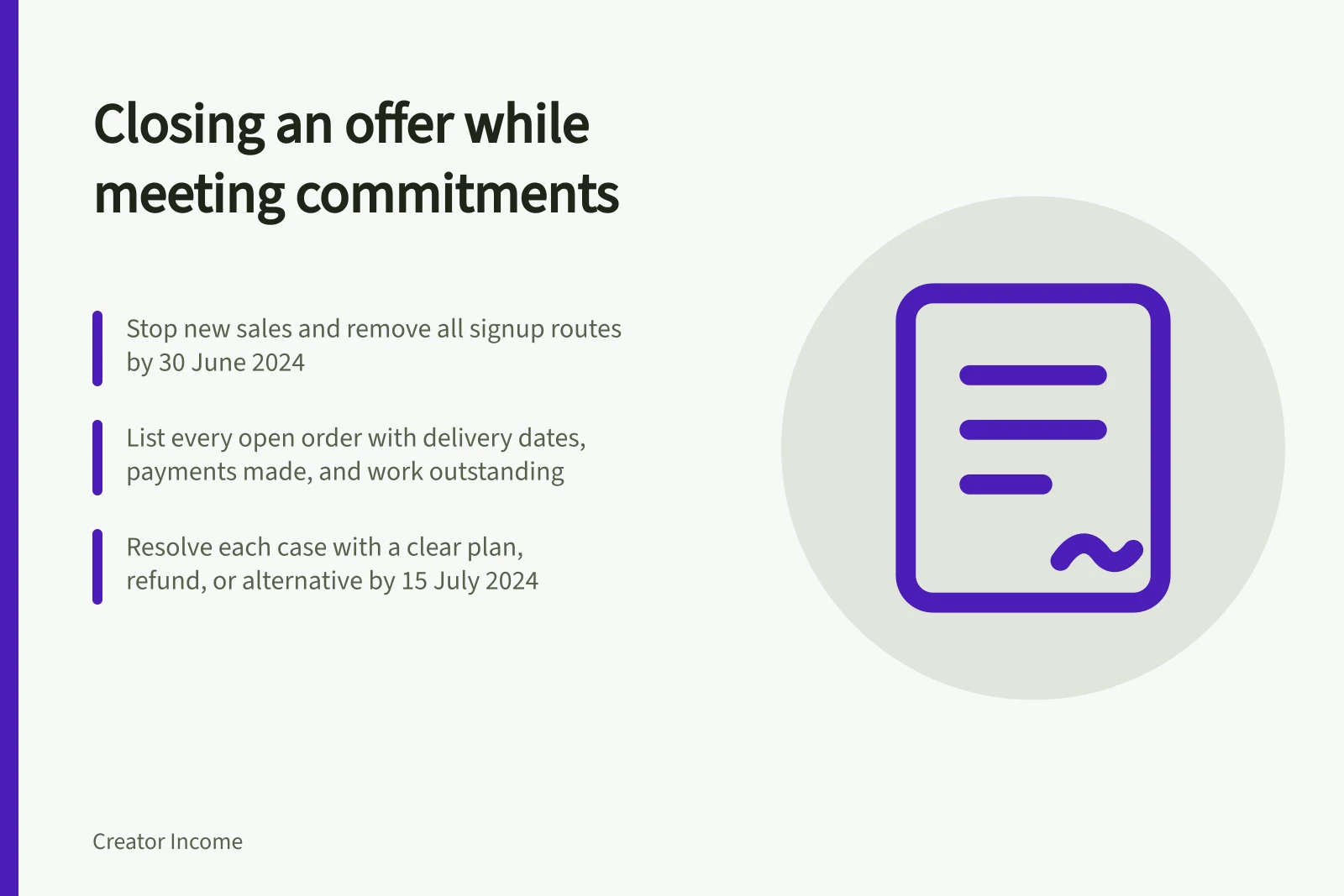
Stop new sales, list open orders and paid periods, then deliver or resolve each existing customer commitment.
Stop new sales and identify every open order, paid period and deliverable. Closing an offer to future buyers does not erase what existing customers bought. Give each affected customer a delivery plan or a resolution suited to the agreement and circumstances.
Stop creating new commitments
Remove purchase and signup routes when you decide the offer can take no more buyers. Check scheduled promotions, payment links and automatic renewals; hiding a sales page may leave a charge active.
Confirm what customers can actually see and do before telling them billing has stopped. Keep the last sales description and accepted terms to establish what earlier buyers were promised.
If existing work can still be fulfilled, close new sales and finish that work. If supply will be delayed or cannot be completed, contact buyers before avoidable deadlines pass. Explain the delay and proposed next step, and avoid promising an outcome you cannot deliver.
List the open commitments
Give each affected transaction one reference. Record the purchase date, amount paid, agreed version, delivery or access period, work supplied, work outstanding, next charge if any and next action. Attach any variation or refund to the original order.
Offer type / Check
- Download or course
- Promised access, files, updates and unresolved faults
- Workshop or service
- Booked date, agreed output, included feedback and work done
- Membership or newsletter
- Paid-through date, remaining benefits, access and future billing
Keep a contact route open during the transition. For a subscription or membership customers cannot access, record the affected period and assess charges and resolution against the agreement and applicable rights.
Resolve each case
If you can deliver what was agreed, give a realistic date and complete it. If you propose a different date, format or benefit, explain the difference and seek agreement where needed.
For a material change to an ongoing service, give prompt notice and explain what will change. Check the specific agreement and applicable rights before deciding how to proceed for customers who do not agree to the change.
Do not present credit as a required substitute for an available refund or other remedy. Assess a reported fault separately from the decision to close. A customer message should identify the order, what has been supplied, what will happen next and when, the customer’s choices and a reply route. Promise only a date you can meet.
Customer Rights Under Australian Consumer Law
- Right to a repair or replacementIf a product or service is faulty, consumers can request repair, replacement, or refund under the Australian Consumer Law (ACL).
- Right to a refundA refund may be required if a product or service cannot be repaired or replaced within a reasonable time.
- Right to cancellationConsumers can cancel a contract if the offer is no longer available or fulfilment is impossible.
- Right to full disclosureCustomers must be informed of changes to services, including delays or reduced benefits, in a timely manner.
Finish the closure
Match final charges, refunds and outstanding invoices to the orders. Confirm that new purchases and unwanted renewals have stopped and that each promised delivery or access period has been provided or resolved. Keep the final terms and resolution record accessible. Wind down the dedicated closure queue once its cases have outcomes, while retaining a way to handle later questions.