Sponsorship Pricing
Part of Evaluating creator revenue offers
Deciding when to raise a price or reduce scope
Diagnose an existing offer before choosing a price rise, a smaller promise or a delivery fix.
Consider a higher price when buyers want the defined result but the current charge does not support the work and costs of delivering it. Consider narrower future scope when a costly part of the promise adds little to the buyer’s result.
Fix faults and unclear instructions first; a price rise cannot repair delivery.
Name the problem
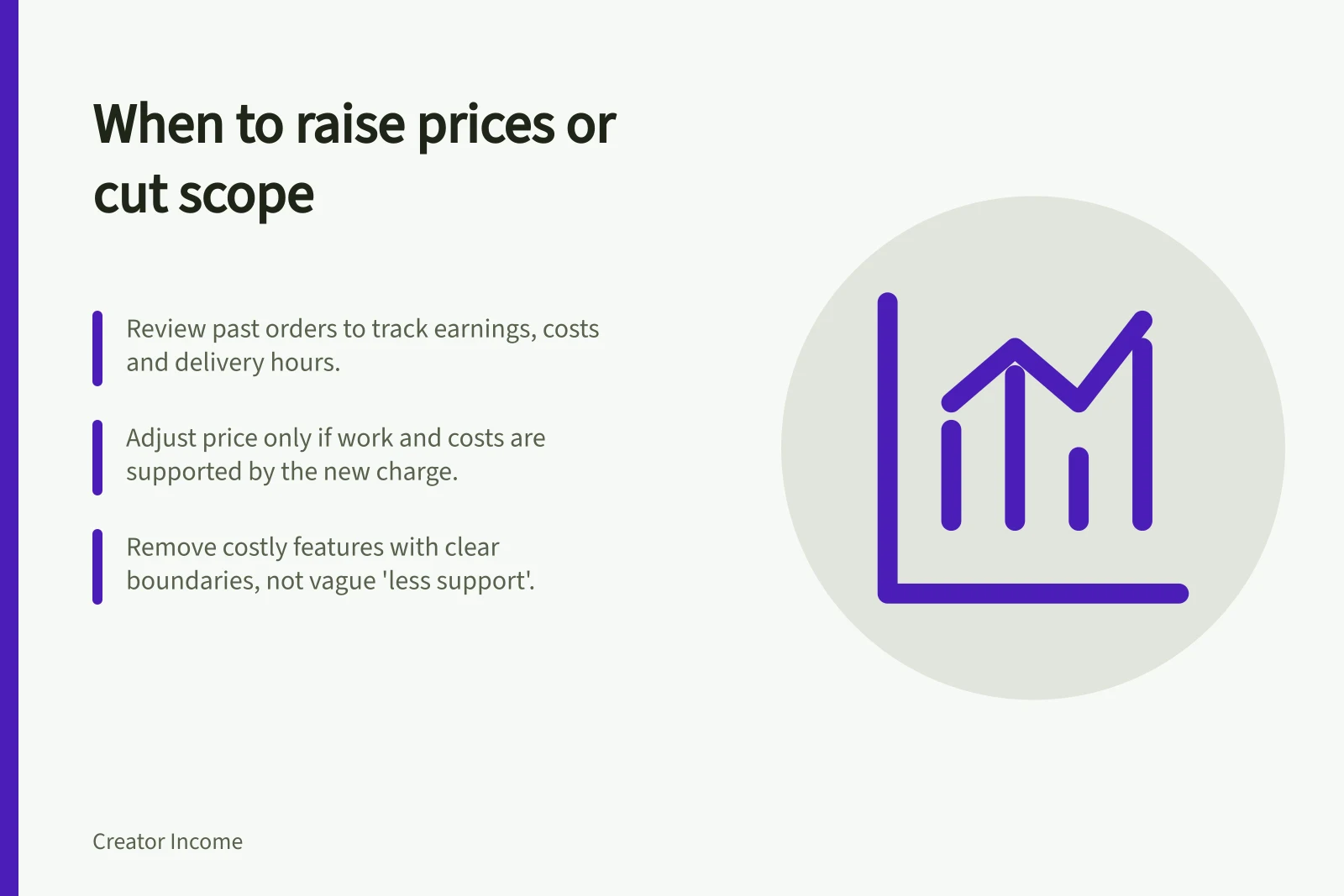
Review completed orders over a stated period. Record the amount earned under the selling arrangement, direct costs, hours, refunds and work still owed. Look at what buyers use and where they struggle. Describe the cause in one sentence, such as: ‘Each order includes an individual review that takes longer than this price supports.’
| Response | Question | Effect on the buyer |
|---|---|---|
| Improve delivery | Can clearer instructions or a better process remove avoidable work? | The agreed benefit remains available |
| Raise the price | Can you offer the full benefit at a charge that supports its work? | Future buyers pay more for that benefit |
| Reduce scope | Can you limit a costly part while keeping a useful core result? | Future buyers receive a smaller, clearly described offer |
Responses can be combined. Name each version and record what changed so later results can be interpreted. Customer feedback about value is useful, but stated willingness to pay is not a completed sale.
Options for Addressing Pricing and Scope Challenges
- Improve deliveryCan clearer instructions or a better process remove avoidable work?
- Raise the priceCan you offer the full benefit at a charge that supports its work?
- Reduce scopeCan you limit a costly part while keeping a useful core result?
Check each version
For a proposed higher price, estimate what remains after deductions and work that grows with each sale. Allow for fixed production and maintenance using a cautious sales case. Compare alternatives available to buyers, but do not treat another creator’s price as proof of what your buyers will pay.
For a narrower version, name the removed benefit and the work it saves. ‘Less support’ is vague. A boundary such as ‘one written question about using the template during the access period; individual document review is separate’ gives a buyer something to assess. A correction to missing or faulty promised work is not an optional upgrade.
If neither version fits your capacity, pause new sales while you assess existing commitments. The ACCC can investigate if a business breaks the rules about accepting payment without intending to supply.
Key Metrics to Track Before Adjusting Pricing or Scope
- Amount earned under current selling arrangement
- Direct costs per order
- Average hours spent per order
- Refunds issued
Apply the change
Set a date and version for future buyers. Update the sales page, checkout and confirmation consistently.
Check existing orders and subscriptions against the accepted terms and benefits already paid for. Do not silently remove a paid benefit or assume a new price automatically applies.
After a comparable sales period, review completed purchases, refunds, questions and delivery hours. Note changes in promotion, audience and timing before attributing a difference to the new version.