Diversification
Part of Creator revenue measurement
Measuring fulfilment costs for creator offers
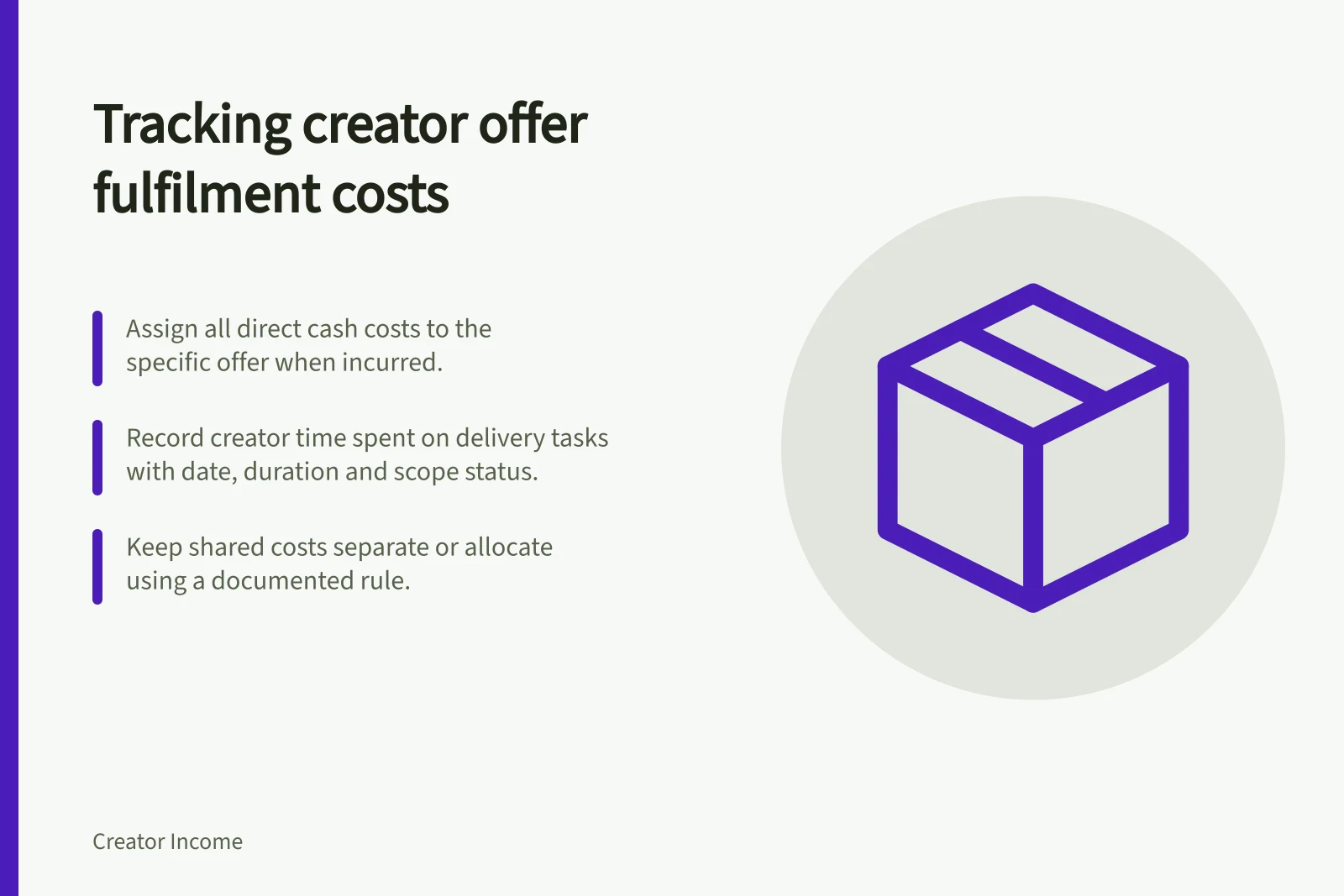
Record direct spending, creator delivery hours and shared costs so an offer's workload is visible beside its receipts.
Measure fulfilment costs by recording the money and time needed to deliver what buyers were promised. Assign each expense to the offer that caused it. Keep shared business costs separate until you can apply a stated allocation method, so sales growth does not hide growth in delivery work.
Define what delivery includes
Start with the accepted offer. A downloadable resource may require file preparation, access help and promised updates; a workshop may require preparation, the session, questions and included feedback; a service may include meetings, revisions and handover. Record only work relevant to the actual promise, and include small support tasks that recur across buyers.
| Group | Examples | How to show it |
|---|---|---|
| Direct cash spending | Contractor work or materials bought for the offer | Assign to the offer when incurred |
| Creator delivery time | Production, calls, revisions and support | Record hours; label any assigned hourly value as a planning assumption |
| Shared costs | Software, equipment or administration serving several offers | Keep separate or allocate by a stated rule |
Show payment processing and customer acquisition costs separately from fulfilment. They matter to wider economics, but answer a different question from the cost of delivering the promise.
Capture spending and time
Use an offer or job reference on each cost and time entry. For time, record the date, task, duration and whether the work was within the original scope.
Keep initial production separate from ongoing delivery. A guide may take substantial work to create while later buyers need less individual help; feedback supplied to each buyer can grow with sales.
Review both total delivery work for the period and work per completed delivery. Show the number of deliveries behind any average. A per-sale figure based on only a few buyers is a limited basis for planning future capacity.
For a hypothetical offer, suppose A$450 was received after refunds, with all figures excluding any applicable GST. Contractor work cost A$72, and A$20 of hosting was allocated to the offer under a documented usage rule. The amount left after those cash delivery costs is A$358.
If the creator also records three support hours and assigns A$30 per hour for planning, the amount after that A$90 allowance is A$268. The hourly value is an assumption, not cash paid to the creator. The calculation excludes payment charges, customer acquisition, other overhead, tax and any delivery still owed.
Key Metrics for Measuring Fulfilment Workload
- Average Delivery Time per Sale
- 2.5 hours
- Shared Costs Allocated via Documented Rule
- Yes
Treat shared work once
A newsletter issue might include a paid sponsor placement and also serve paying readers. Do not assign its full writing time to both streams. Keep that work at business level, or allocate it using a documented rule that reflects how the work was used. Apply the same rule when comparing periods, and show the result before and after allocation if it materially changes the view.
Use the record to locate the source of delivery effort: initial creation, repeated access questions, revisions or individual support. Measuring those tasks gives a basis for later decisions about capacity or offer design. Cost alone does not establish the price buyers will accept or whether an offer should continue.