Revenue Planning
Part of Creator revenue measurement
Tracking income by revenue source
Set up a traceable source ledger for creator income and separate reported, pending and received amounts without double counting.
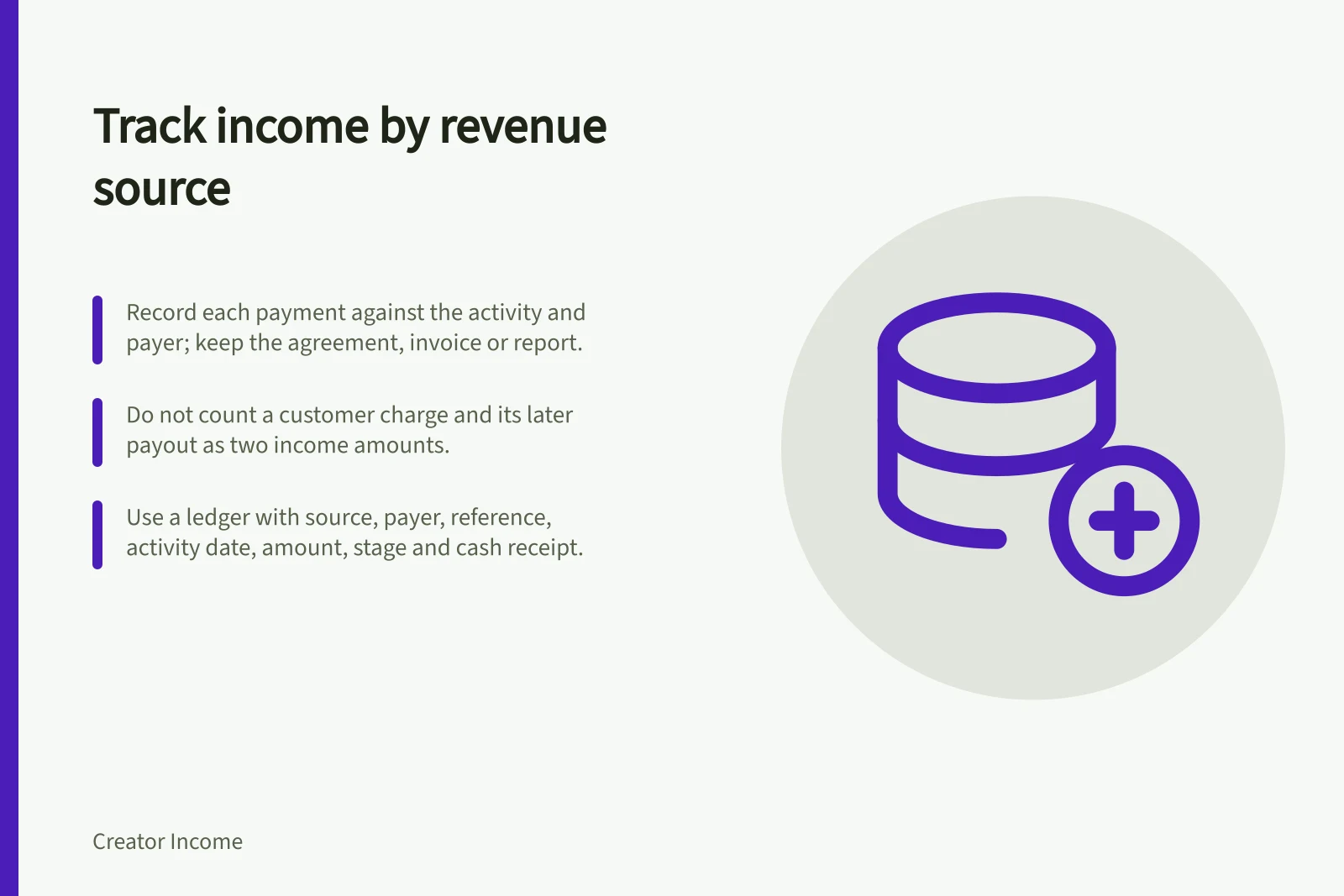
Record every creator payment against the activity and payer that generated it. Keep the agreement, invoice or report that explains the amount, and separate a reported amount from cash received. Each source report should trace a monthly total back to individual transactions, without counting a customer charge and its later payout twice.
Define sources by why you are paid
Useful categories may include platform advertising, sponsorship, services, memberships, product sales, affiliate commissions and licensing. Add an offer or project name when it helps identify a transaction. Switching payment processor does not by itself create a new revenue source.
If a brand pays for a placement and a platform separately pays for activity on the same video, record the two payment arrangements separately. If a membership service reports customer charges and later sends a payout, check its terms and report definitions before treating both figures as creator revenue. The amount charged to customers may differ from the amount the creator is entitled to receive.
Customer charge vs creator payout
- Customer charge
- Amount a membership or platform service reports was charged to customers
- Creator payout
- Amount the creator is entitled to receive, which may differ
Keep a traceable transaction record
Use a stable reference for each underlying transaction or reporting item. A simple ledger can hold these fields:
Field / What to record
- Source and offer
- Income category and project, product or tier
- Payer or platform
- Party responsible for payment
- Reference
- Agreement, invoice, order or report identifier
- Activity date
- When the described sale, service or activity occurred
- Defined amount
- Original figure, currency and GST basis
- Current stage
- Reported, invoiced, pending, adjusted or received, as applicable
- Cash receipt
- Amount and date received, if any
Keep the original invoice, platform statement, sales export and bank record. Australian business guidance includes income transactions and bank records among records to retain. The suggested ledger organises those documents; it does not replace them or set accounting recognition rules.
When a refund or correction occurs, retain the original reference and record the adjustment against it. Preserve enough history to explain why the current total differs from an earlier report. For an affiliate commission, use the program's own status definitions; clicks and projected sales are outside this income ledger unless they lead to a recorded payable amount.
Ledger fields for each income item
- Source and offerIncome category and project, product or tier
- Payer or platformParty responsible for payment
- ReferenceAgreement, invoice, order or report identifier
- Activity dateWhen the described sale, service or activity occurred
- Defined amountOriginal figure, currency and GST basis
- Current stageReported, invoiced, pending, adjusted or received, as applicable
- Cash receiptAmount and date received, if any
Make the monthly report checkable
Choose and label a basis for each total, such as cash received during the month. Show reported or outstanding amounts in separate columns. Do not add a September membership charge to its October payout as if they were two payments. Keep original currencies and document conversion when presenting a combined Australian dollar view.
For each source, show the defined period amount, refunds or adjustments, cash received and outstanding amount where those measures apply. Note a delayed or unusually large project payment. Compare totals with supporting statements and bank entries, and investigate unmatched items without silently changing earlier records.
This view answers which activities produced recorded income, on what basis and at what stage. Delivery costs and hours belong in a separate measurement before judging an offer's overall result.
Month-end income source check
- Choose and label the basisFor example, cash received during the month
- Separate reported and outstandingShow them in separate columns from cash received
- Avoid double countingDo not add a membership charge and its later payout as two payments
- Keep currencies visibleRetain original currencies and document any conversion to Australian dollars
- Reconcile to statementsCompare totals with supporting statements and bank entries
- Investigate unmatched itemsDo not silently change earlier records