Memberships
Part of Creator service businesses
Setting boundaries for revisions and support
Define revision rounds, distinguish corrections from changed requests and set a clear period and channel for client support.
Set revision and support boundaries before the client accepts the work. State what feedback is included, when it is due, how you will respond and what happens when a request changes the agreed task. The terms should make delivery predictable while leaving room to address work that does not meet the agreement.
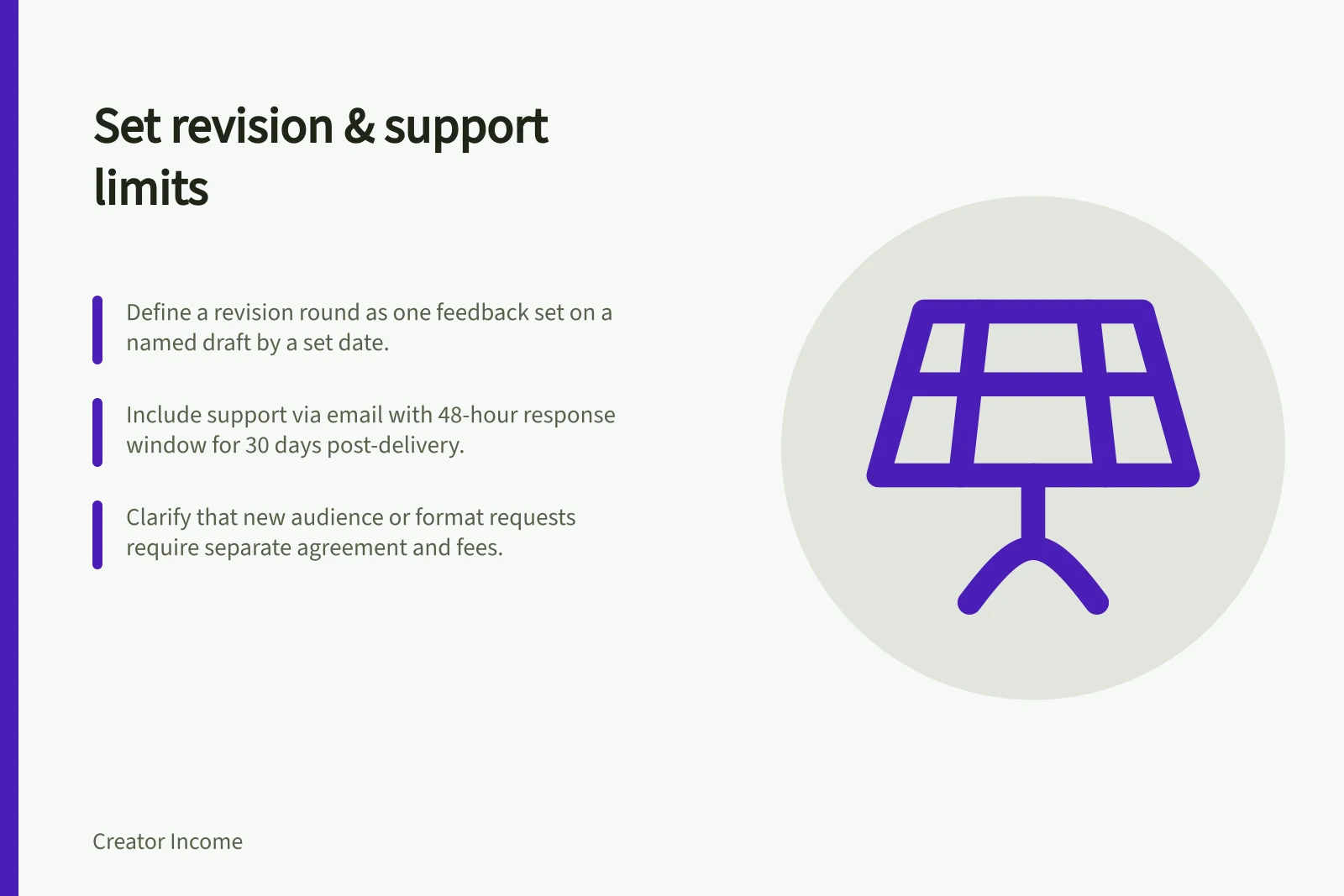
Define a revision round
“Two revisions” is open to interpretation. Define a round as one consolidated set of feedback on a named draft, received through an agreed channel by a stated date. Say who on the client side can approve it. If stakeholders send conflicting notes separately, ask for one decision before the round begins.
Specify what a round can change. It might cover wording, pacing or selection within the accepted brief. A new audience, message, format or source asset may require new work. Give the client a way to request that work.
Record the version sent, feedback received and changes made. Both parties can then see whether a point was missed or a new request was added.
Separate a correction from a new direction
If work misses an agreed requirement, fix it under the original scope. If the client changes the requirement after seeing the work, describe the added work, fee and timing for agreement before proceeding. Assess the request against the accepted brief and the actual problem, not just the number of rounds used.
The ACCC educates businesses and consumers about rights and obligations under the consumer guarantees, but it does not provide legal advice about what consumers are entitled to. Avoid wording that makes every correction a paid variation.
Put support on a schedule
Support might mean answering questions about the delivered file, helping with access or advising on later decisions. Name what you include. State the support channel, period, expected response window and what information the client should provide. If live calls are included, specify their purpose and duration.
For a handover, you might include a defined period for written questions about using the delivered work. New production, ongoing management or troubleshooting another supplier's system needs separate agreement unless already included.
Handle a change request openly
When a request falls outside scope, describe the change, the work it adds and its effect on fee and delivery date. Agree on that change before doing it. Australian contractor guidance includes documenting contract variations as a step when preparing a contract. Keep the variation with the original agreement so both parties can see the current scope.
At the end of the project, look for repeated feedback. If clients often ask for the same adjustment, clarify the brief or the first-draft process for future work.