Revenue Planning
Part of Creator service businesses
Managing capacity before accepting more clients
Review committed work, uncertain proposals, client input dates and review time before promising another service deadline.
Check committed work and deadlines before accepting another client. Decide from a dated work plan that includes reviews and support after the first deliverable. A new fee does not create more delivery time.
Build a view of committed work
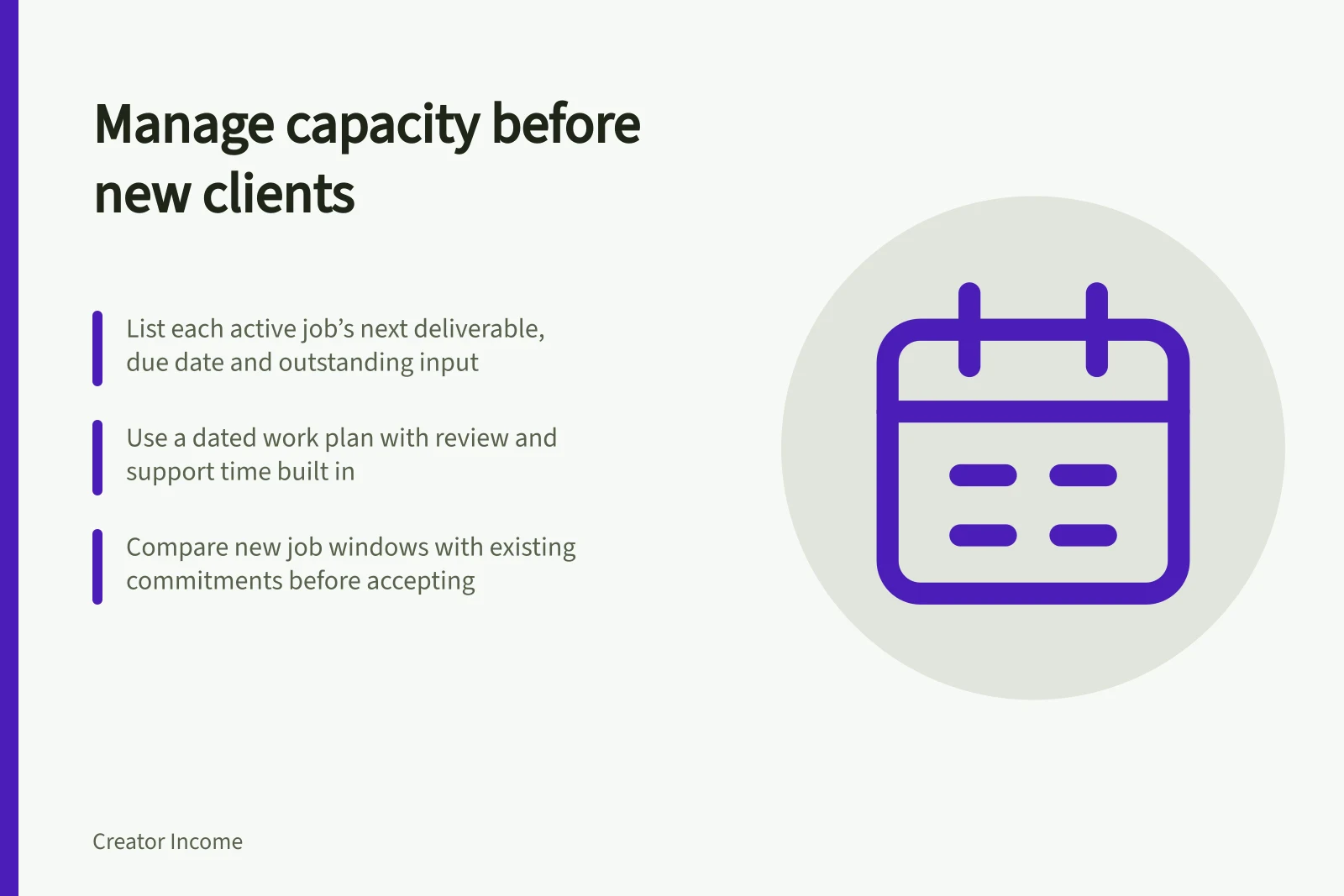
List each active job's next deliverable, due date, outstanding client input and estimated remaining work. Include meetings, administration, revisions and promised support. Add time you intend to protect for your own publishing or other business work.
Show uncertain work separately. A proposal awaiting acceptance is not a booked job, but several proposals could be accepted close together. Note when a decision is expected to avoid offering the same delivery slot twice.
| Work state | Capacity treatment |
|---|---|
| Accepted and underway | Reserve the remaining delivery and review time |
| Accepted but awaiting inputs | Reserve a workable window and state when the schedule may need resetting |
| Quoted, not accepted | Hold a slot only if you have promised to hold it; record when that hold ends |
| Possible enquiry | Reserve no delivery slot unless you make a specific commitment |
Estimate the whole new job
Break the proposed job into briefing, production, internal checks, client review, changes and handover. Use records from similar completed work if you have them; otherwise label the estimate as uncertain.
Check whether the job needs one uninterrupted block or several short sessions. Time between meetings may not suit concentrated editing or writing.
Ask when the client can supply material and approve drafts. Put input dates and review windows in the proposed schedule. If an input is late, discuss a revised timetable instead of silently compressing your work.
Decide what can fit
Compare the new job's work windows with existing commitments. Allow for interruptions and delayed approvals according to your circumstances; no universal buffer percentage exists.
If the job cannot fit, offer a later start, narrow the deliverable with the client's agreement or decline. Subcontracting is an option only if the agreement, budget, quality checks and access permissions support it.
When clients compete for the same week, account first for work already accepted and deadlines you can meet. Resolve any proposed change to an existing commitment with that client before using its time for a new job.
Review the schedule as work changes
Update remaining work and dates after each milestone. Add newly agreed variations to the plan. Document each agreed contract variation and update the schedule to match.
After delivery, compare estimated and actual time by task. If review and support repeatedly take longer than planned, allow for that work in the next schedule or narrow the promise. Use the updated plan when deciding whether another job fits.